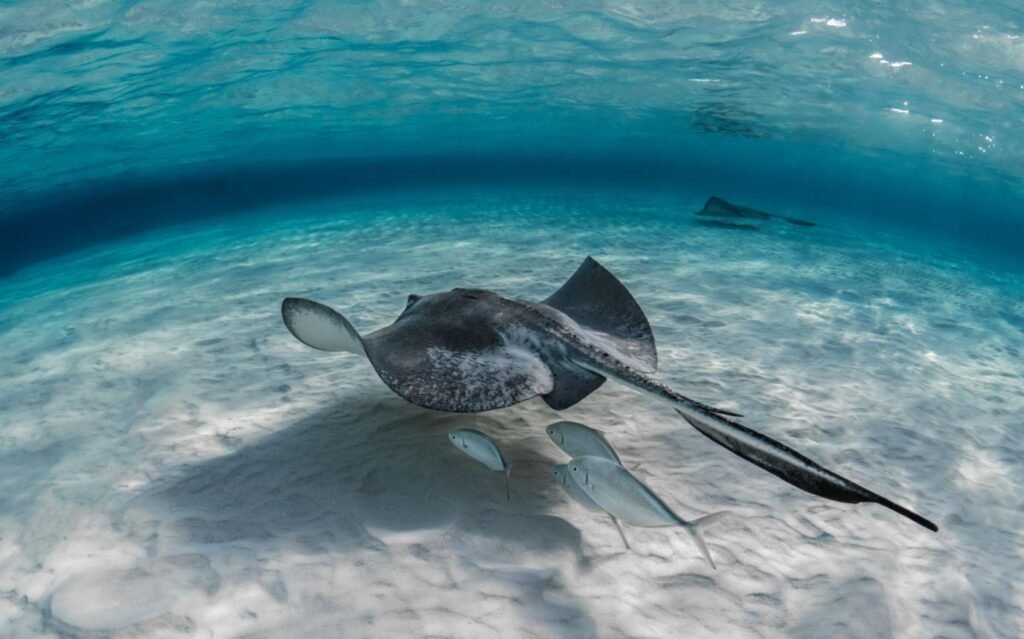
Stingrays are among the most remarkable and scientifically fascinating marine animals in the world. Recognized for their flattened bodies, elegant swimming style, and long defensive tails, these creatures represent one of the most specialized evolutionary branches of cartilaginous fish. Their smooth, gliding movement through the water often gives the impression that they are flying beneath the ocean surface, which is one of the reasons they are so admired by marine biologists, divers, and wildlife enthusiasts.
7
Stingrays belong to the subclass Elasmobranchii, the same biological group that includes sharks, skates, and rays. Unlike most fish, which possess skeletons made of bone, stingrays are cartilaginous fish, meaning their internal structure is composed mainly of cartilage. This adaptation provides both flexibility and reduced body mass, allowing more efficient movement in aquatic environments.
There are dozens of species of stingrays distributed throughout oceans, coastal zones, estuaries, and freshwater systems around the world. Some species inhabit shallow tropical reefs, while others are found in deep marine environments or muddy river basins.
One of the most extraordinary aspects of stingrays is their body design.
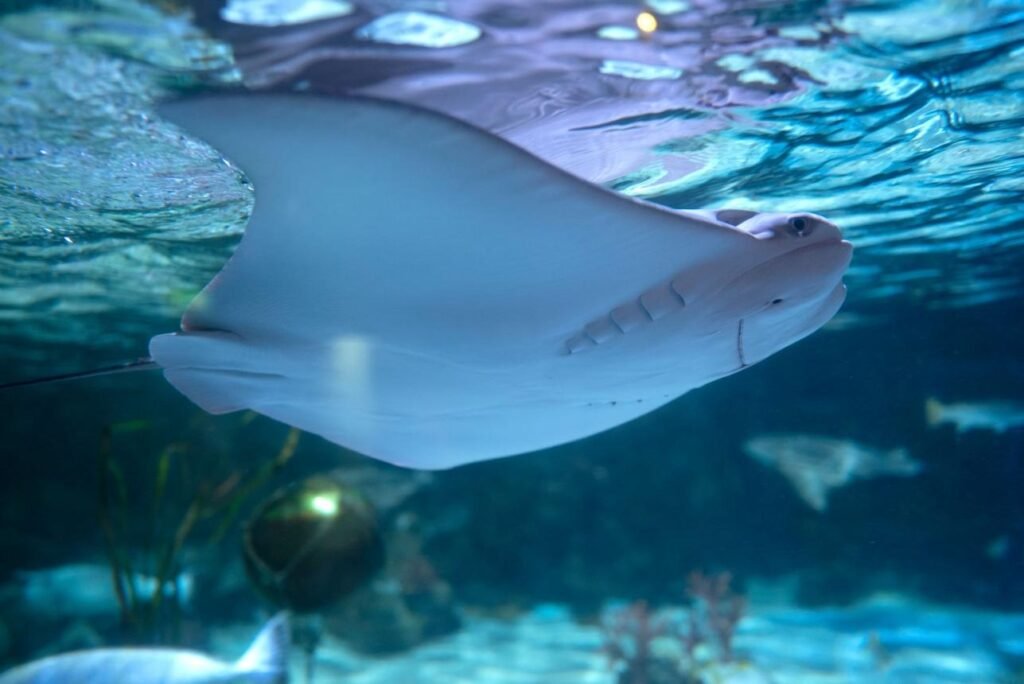
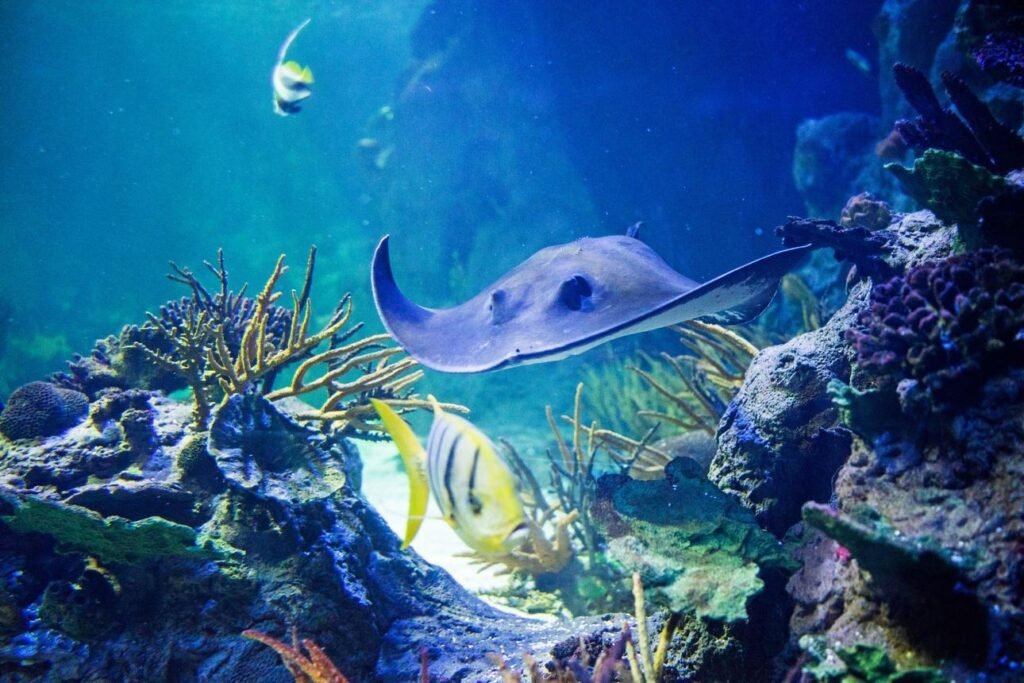
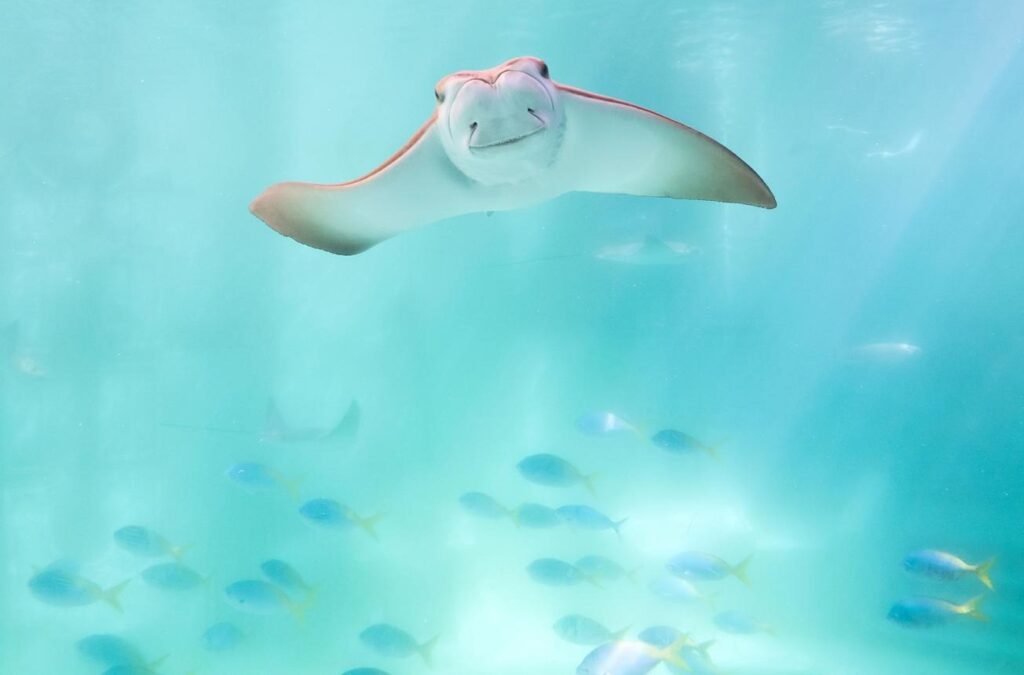
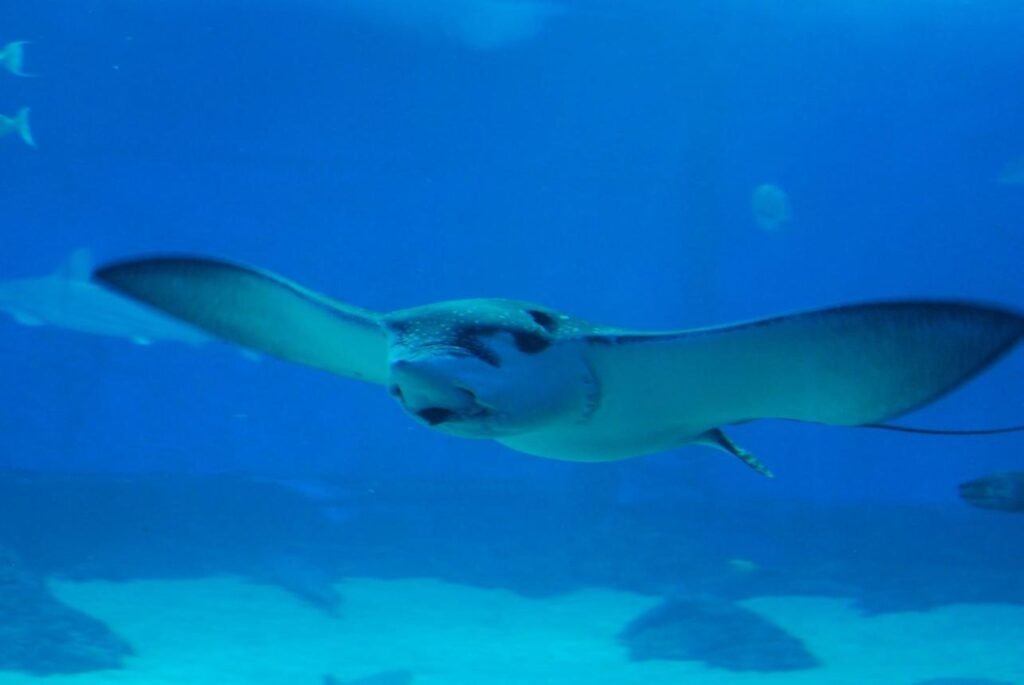
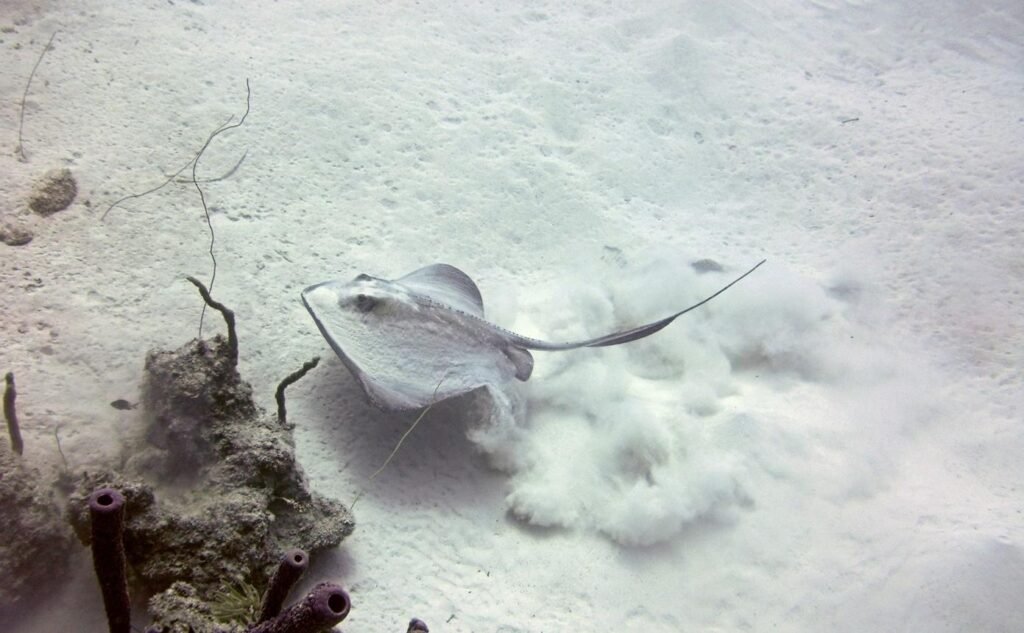
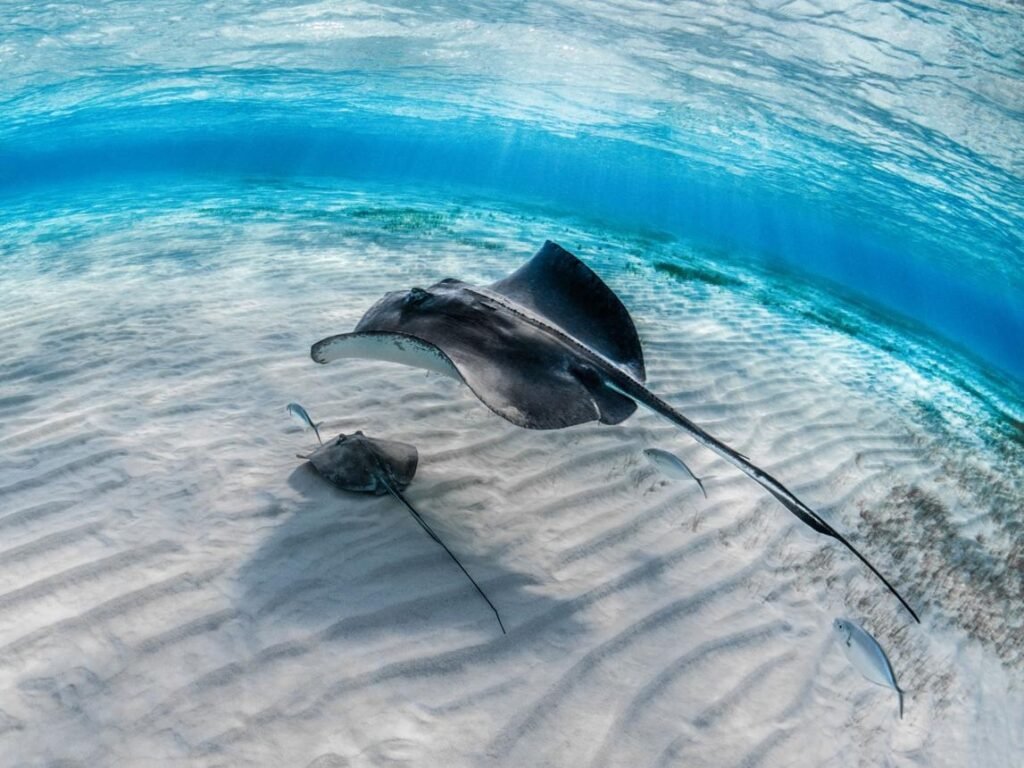
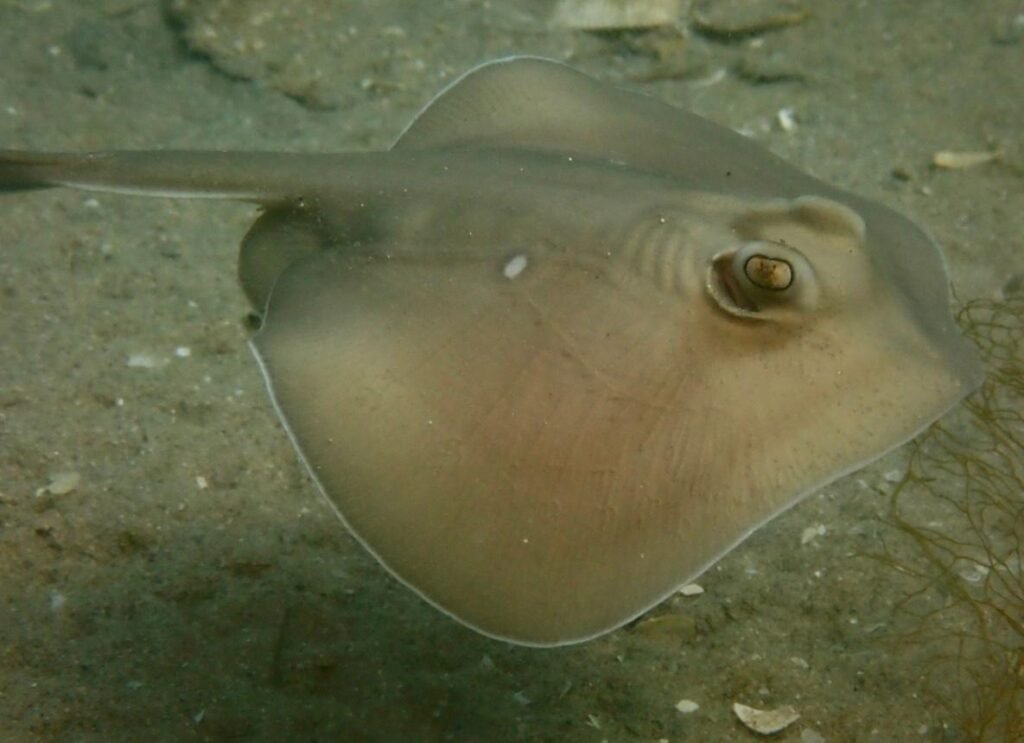
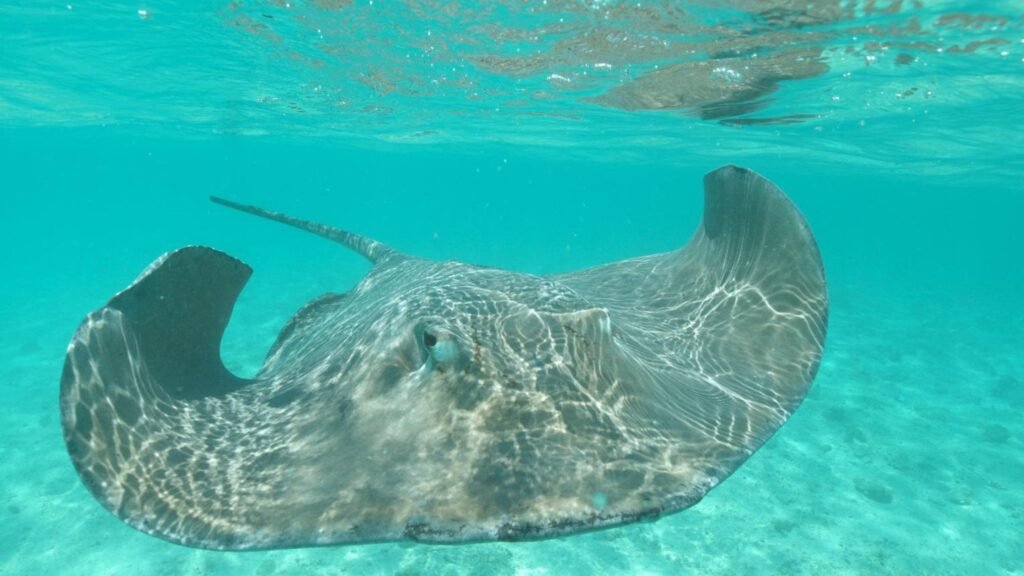
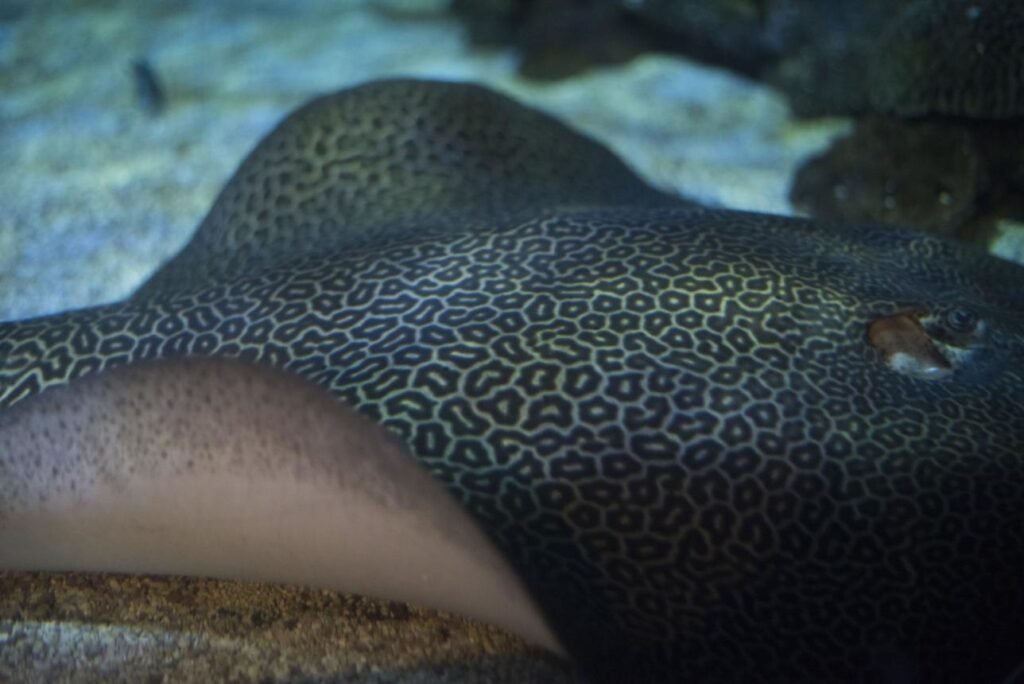
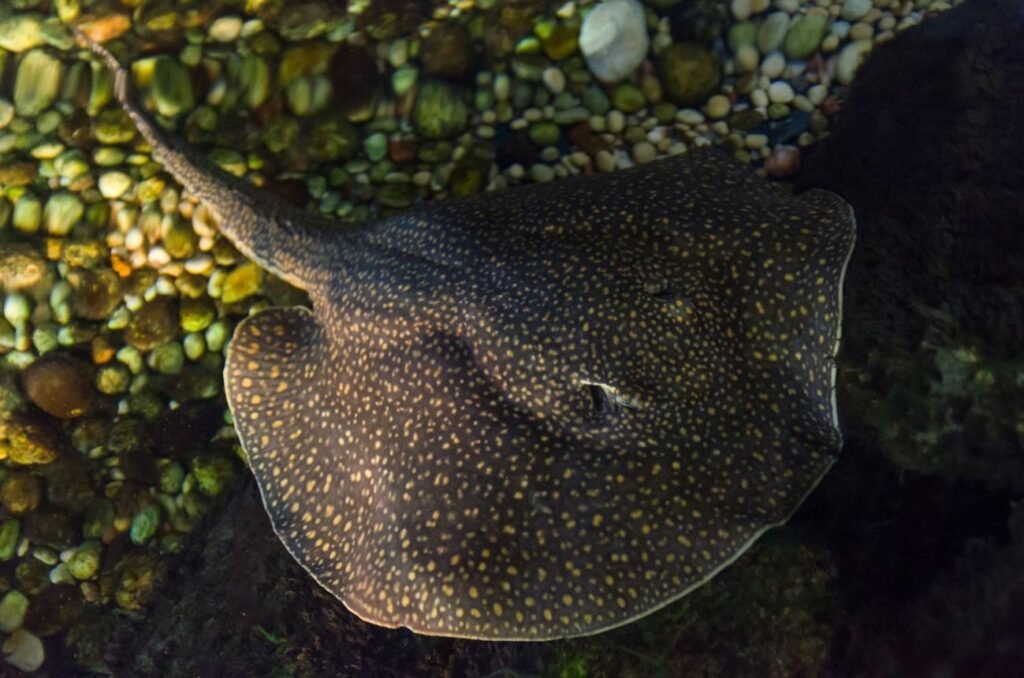
Their bodies are strongly flattened dorsoventrally, creating a disc-like shape. The pectoral fins are fused with the sides of the head, forming large wing-like surfaces that extend outward.
These fins are responsible for their famous gliding motion.
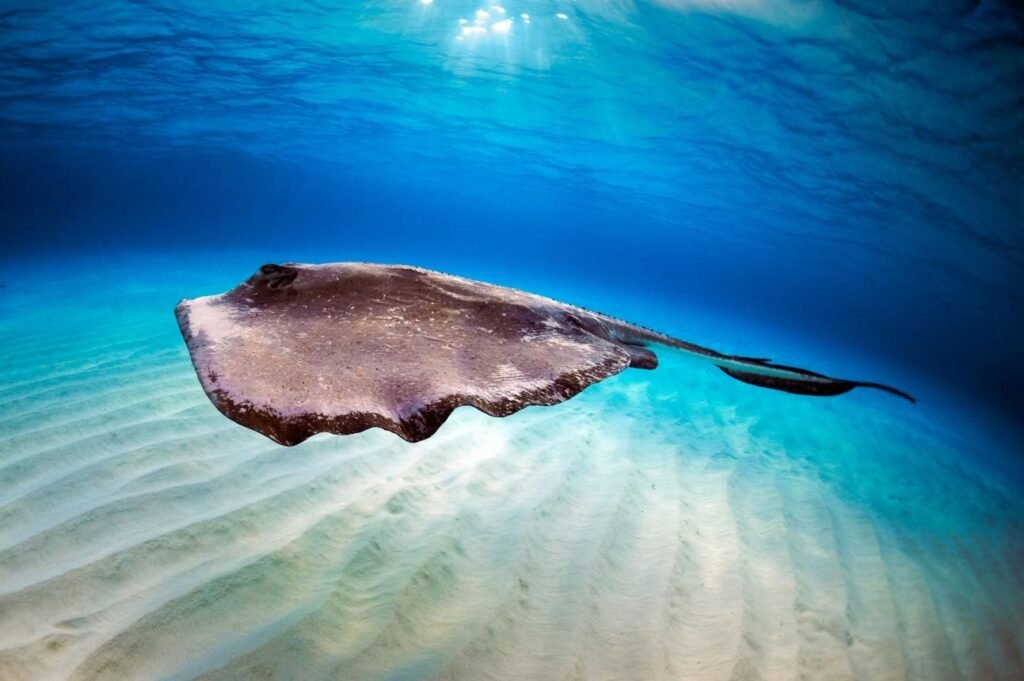
Rather than swimming by tail propulsion like many fish, stingrays move through the water by undulating their broad fins in wave-like motions.
This creates an elegant and energy-efficient form of locomotion.
8
This specialized anatomy is highly advantageous for life near the seabed.
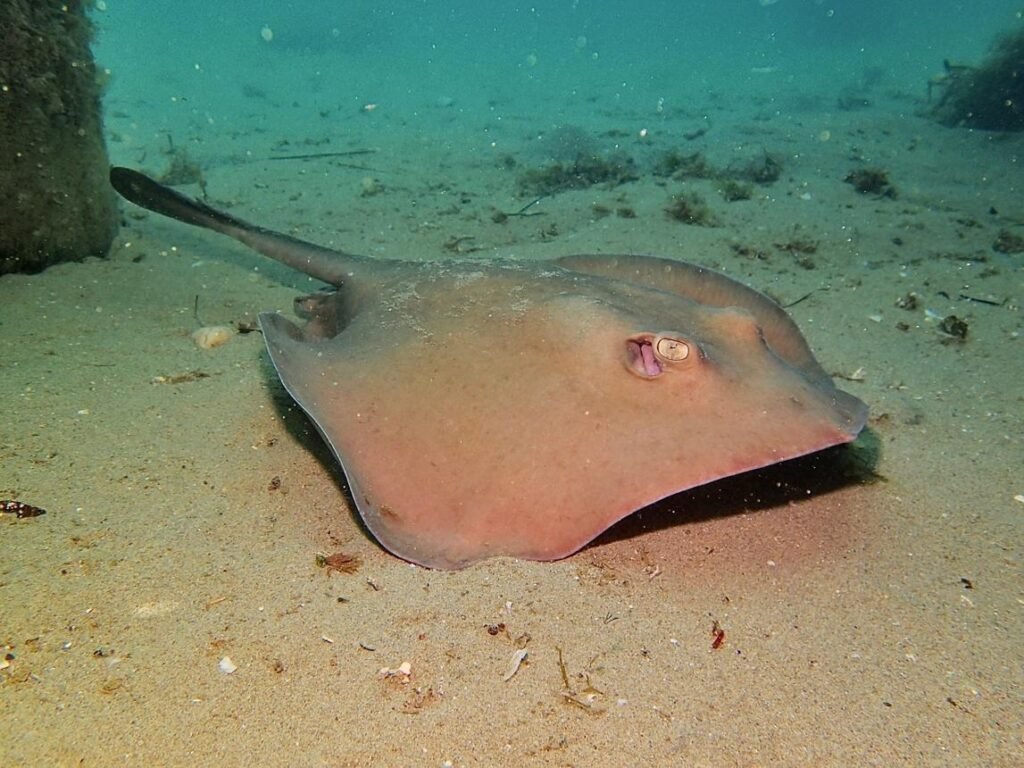
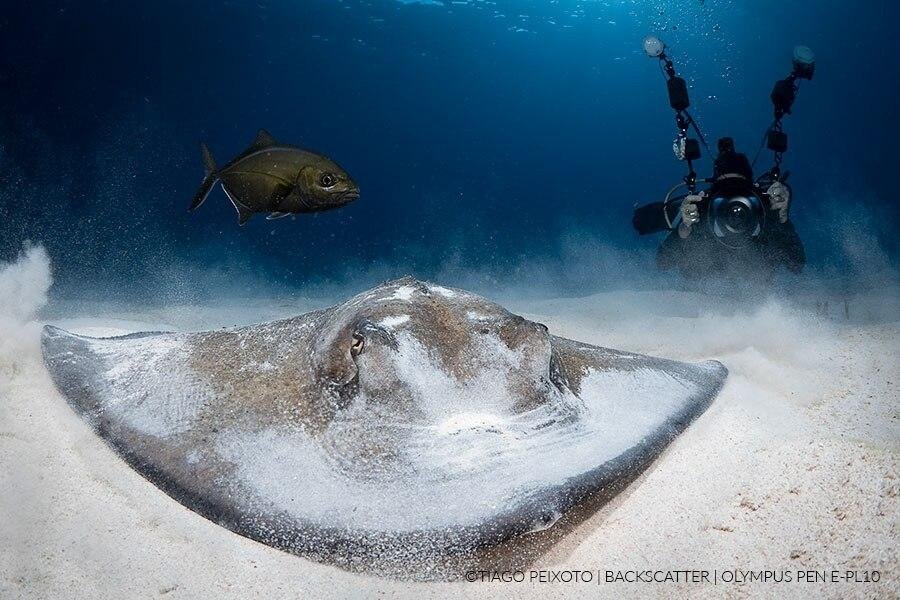
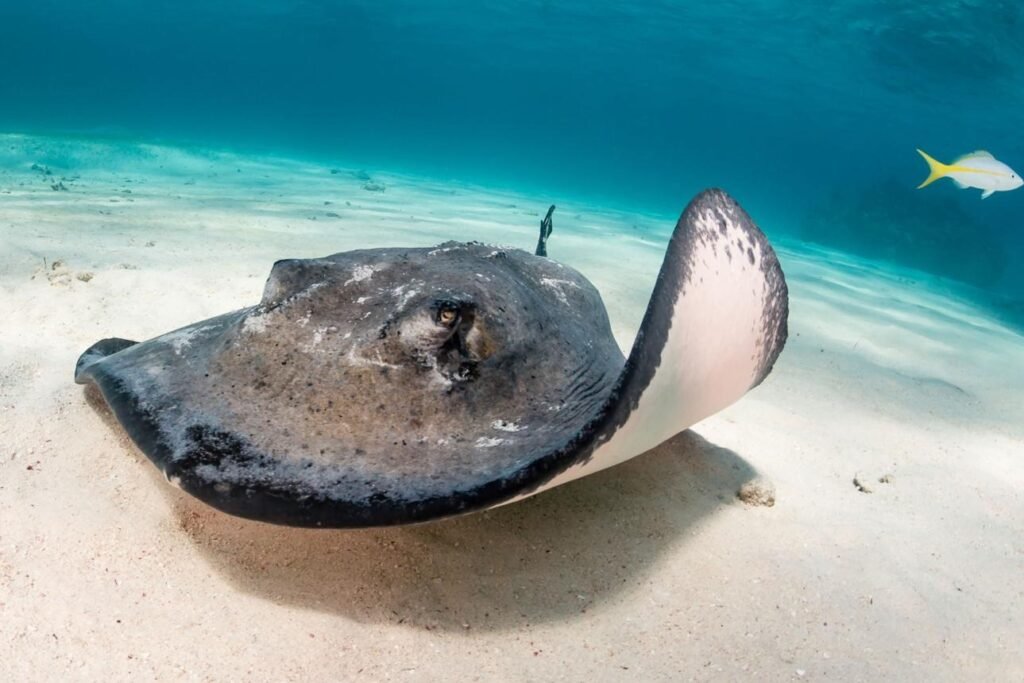
Many stingrays spend significant amounts of time resting on sandy or muddy ocean floors. Their flattened bodies allow them to remain extremely close to the substrate, often partially burying themselves beneath the sand.
This behavior serves multiple biological purposes.
First, it acts as camouflage.
By covering themselves with sand, stingrays become nearly invisible to predators.
Second, it provides an excellent ambush strategy.
Many prey species such as shrimp, worms, and small fish are less likely to detect the stingray until it is too late.
Another striking feature is the tail.
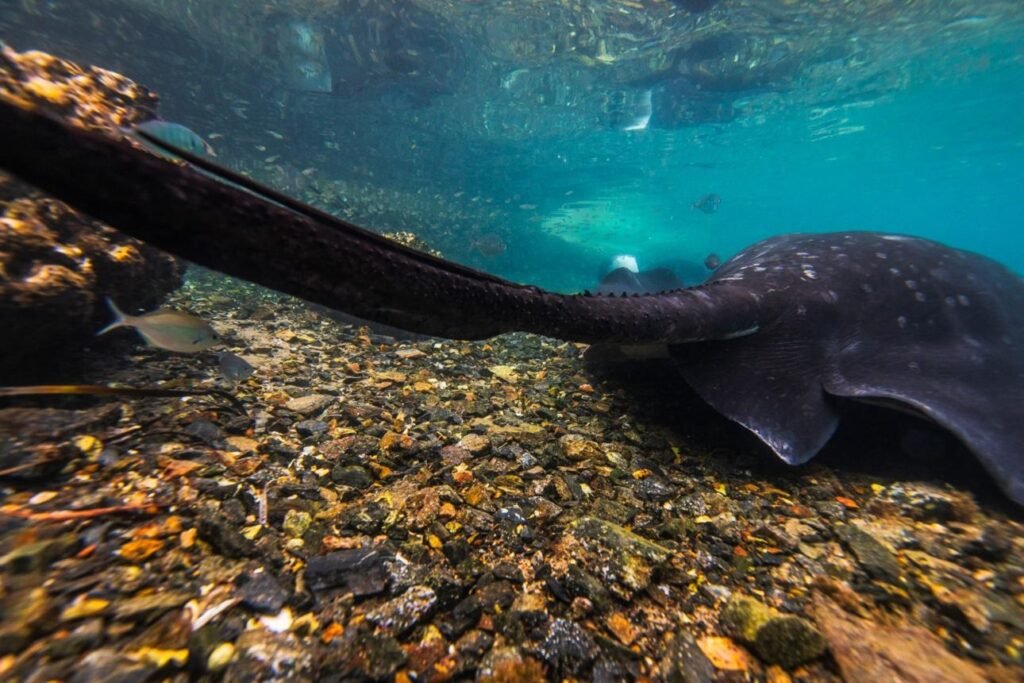
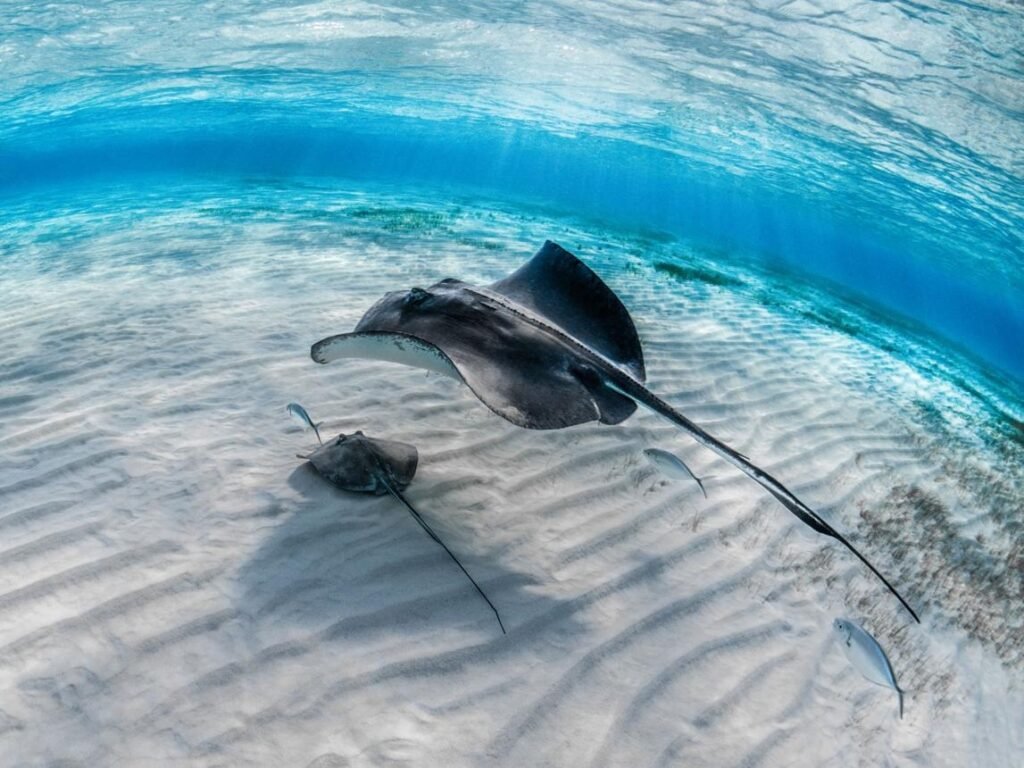
Most stingrays possess a long, slender, whip-like tail that may contain one or more venomous barbs.
These barbs are sharp, serrated defensive spines coated with venom-producing tissue.
Contrary to popular belief, stingrays do not actively hunt using the barb.
Its main purpose is defense.
If threatened, cornered, or stepped on, the stingray may rapidly whip its tail upward.


8
This defensive mechanism can cause painful injuries and, in rare cases, serious medical complications.
Despite this, stingrays are generally calm, non-aggressive animals.
They typically avoid confrontation and prefer escape over defense.
From an anatomical perspective, their sensory organization is highly specialized.
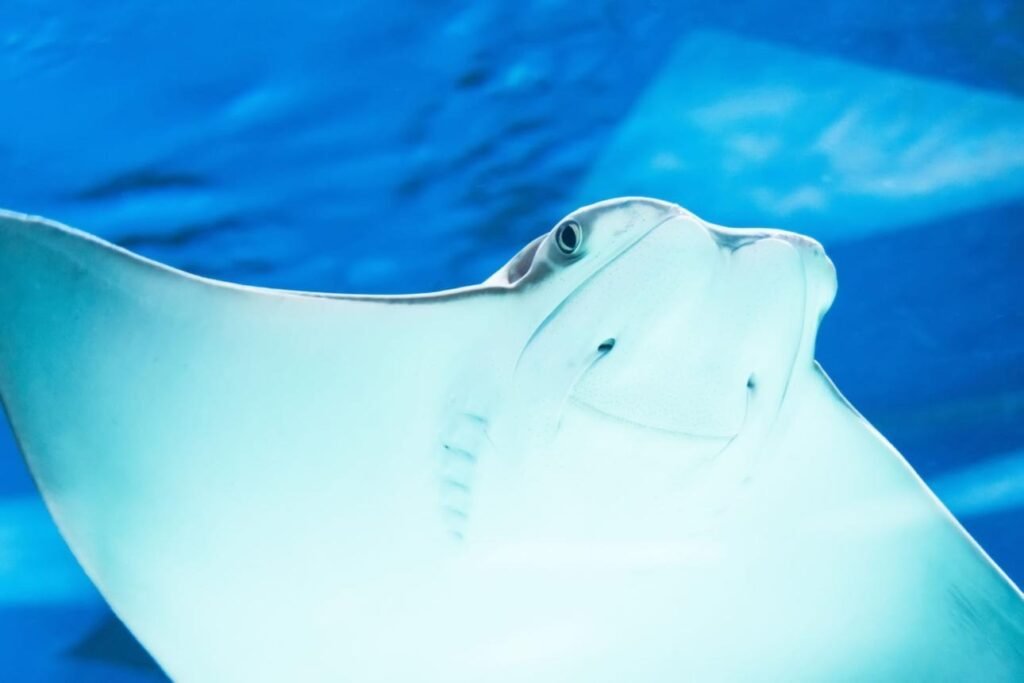
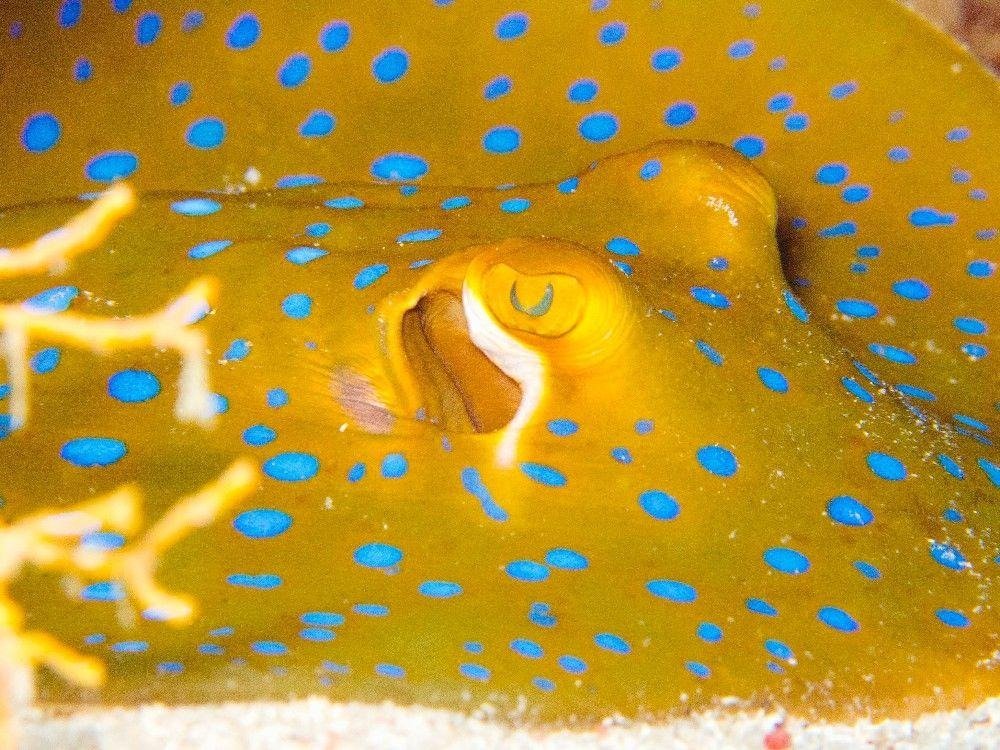
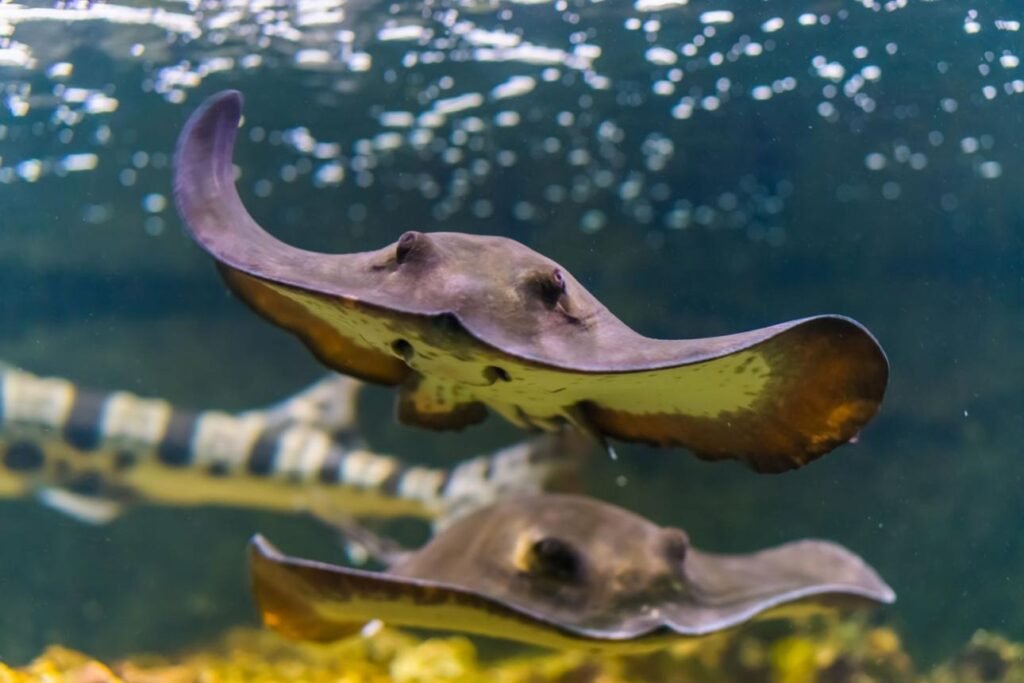
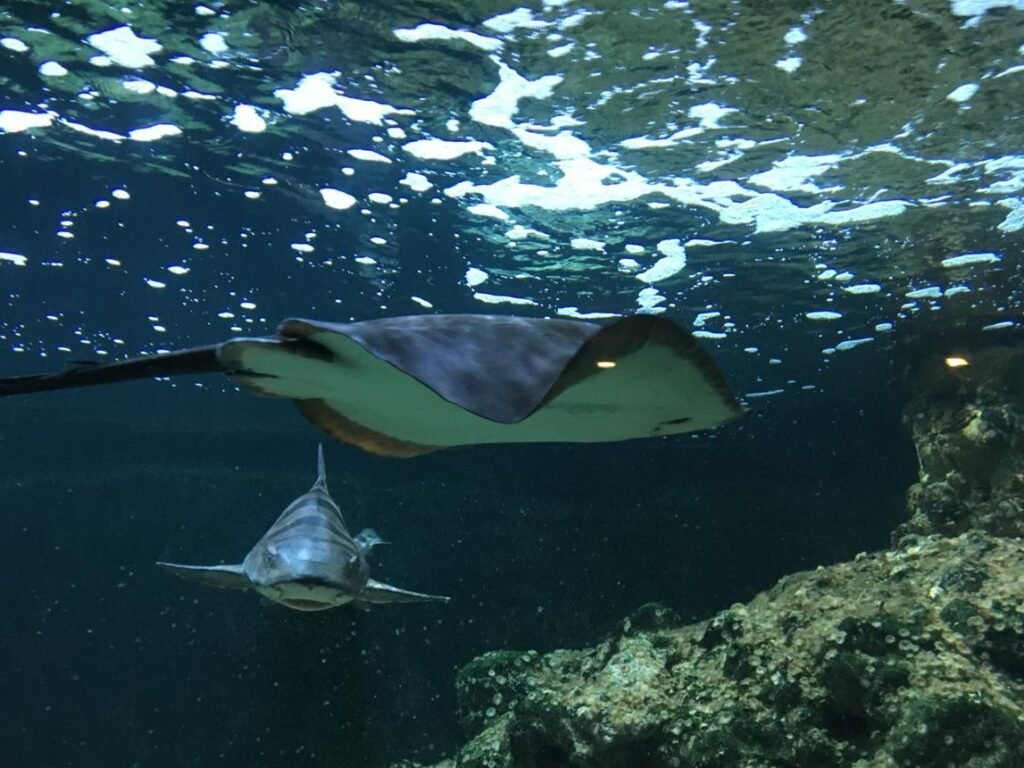
The eyes are positioned on the dorsal (upper) side of the body, while the mouth, nostrils, and gill openings are located ventrally (underneath).
This arrangement is perfectly suited to bottom-dwelling life.
While buried in sand, the stingray can monitor the surrounding environment from above while continuing to breathe and feed from below.
7
One of the most fascinating biological adaptations of stingrays is their electroreception system.
Like sharks, stingrays possess specialized organs known as ampullae of Lorenzini.
These electroreceptors detect extremely small electrical fields generated by living organisms.
This means that even if prey is completely hidden beneath the sand, the stingray can still locate it by sensing muscle contractions and nervous system activity.
This ability makes stingrays highly efficient hunters.
Their diet mainly includes:
- crabs
- shrimp
- mollusks
- shellfish
- marine worms
- small fish
- benthic invertebrates
Their teeth are flattened and adapted for crushing shells and hard exoskeletons.
From an ecological perspective, stingrays are extremely important.
As benthic predators, they regulate populations of organisms living on the seabed.
This helps maintain ecological balance in marine environments.
Additionally, their feeding activity often disturbs sand and sediment, which contributes to nutrient redistribution and sediment oxygenation.

8
Behaviorally, stingrays vary depending on species.
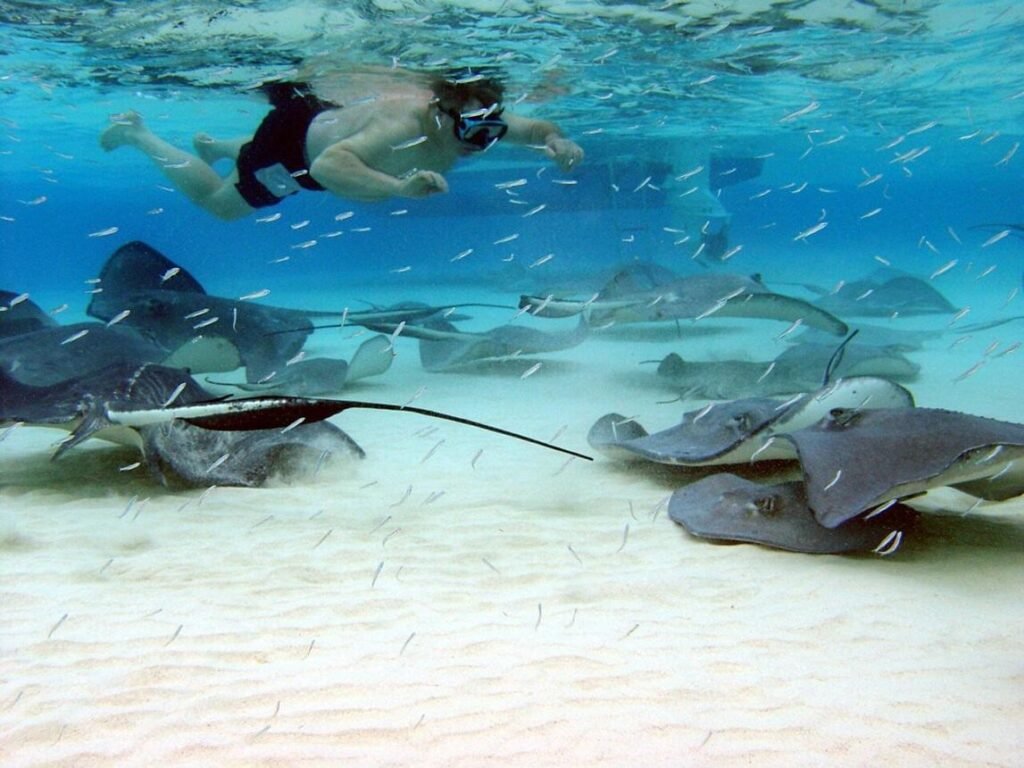
Some are solitary animals, while others may gather in large groups, particularly during migration, feeding, or breeding periods.
Some species undertake seasonal movements across coastal waters.
Reproduction in stingrays is also highly interesting.
Many species are ovoviviparous, meaning embryos initially develop inside egg cases retained within the mother’s body.
The offspring later emerge alive, fully formed, and capable of immediate independent swimming.
7
This reproductive strategy increases survival rates compared to externally laid eggs.
From an evolutionary standpoint, stingrays represent a highly successful lineage of marine adaptation.
Their flattened morphology, electroreception, camouflage, and venomous defense make them among the most specialized fishes in aquatic ecosystems.
Culturally, stingrays are often associated with mystery, elegance, and marine symbolism.
In many coastal regions, they are important components of marine tourism and educational conservation programs.
In conclusion, stingrays are extraordinary marine organisms that combine anatomical sophistication, advanced sensory biology, elegant movement, and critical ecological roles.
Their ability to thrive in complex aquatic ecosystems makes them one of the most impressive examples of marine evolutionary adaptation.
10 Fascinating Facts About Stingrays
1. Stingrays are closely related to sharks
One of the most surprising facts is that stingrays are actually close relatives of sharks. Both belong to the subclass Elasmobranchii and have skeletons made of cartilage instead of bone. This makes their bodies lighter and more flexible, which helps them move efficiently through the water.
8
2. They can bury themselves in the sand
Stingrays are experts at camouflage. They often bury themselves under sand or mud, leaving only their eyes and spiracles visible. This helps them hide from predators and surprise prey.
3. Their sting is used for defense, not hunting
Many people believe stingrays use their venomous barb to hunt, but this is not true. The barb is mainly a defense mechanism used only when the animal feels threatened.

6
4. They can sense electricity
Like sharks, stingrays can detect the electrical signals produced by living animals. This helps them locate prey hidden beneath the sand.
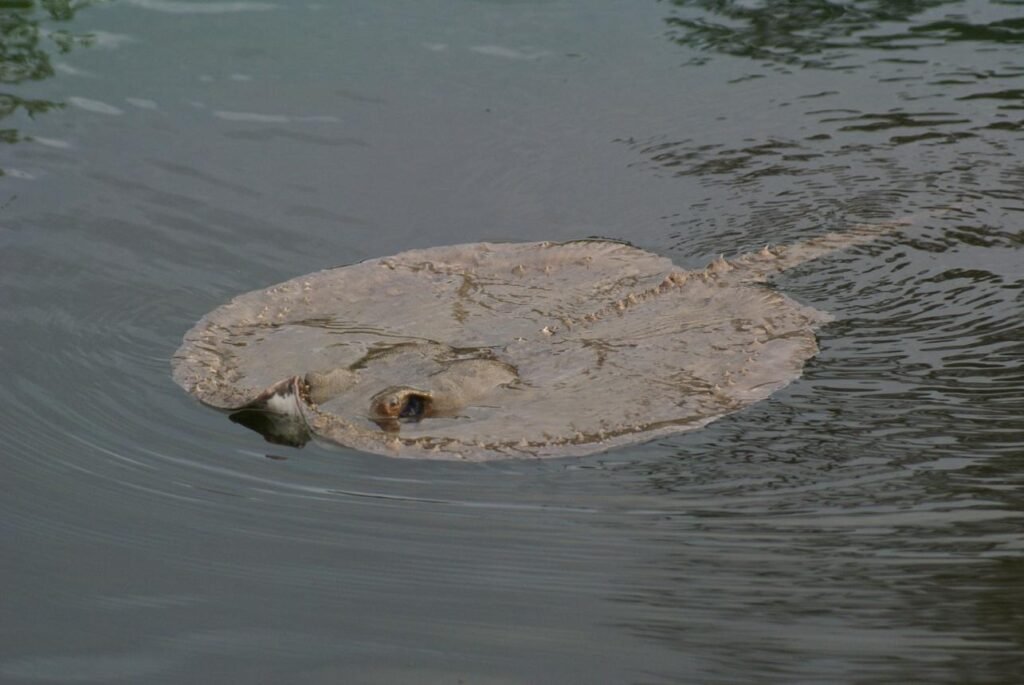
5. Some stingrays live in freshwater
Although many species are marine, some stingrays live in rivers and freshwater systems, including parts of Brazil.
6
6. Baby stingrays are born fully formed
Many species give birth to live young. Baby stingrays are born already able to swim and survive on their own.
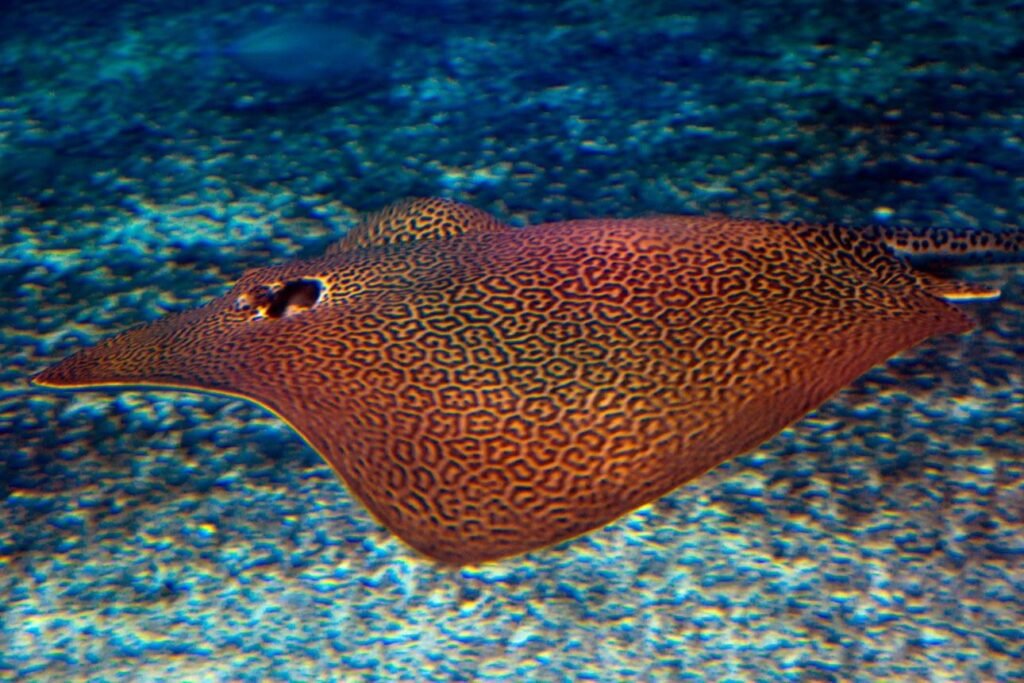
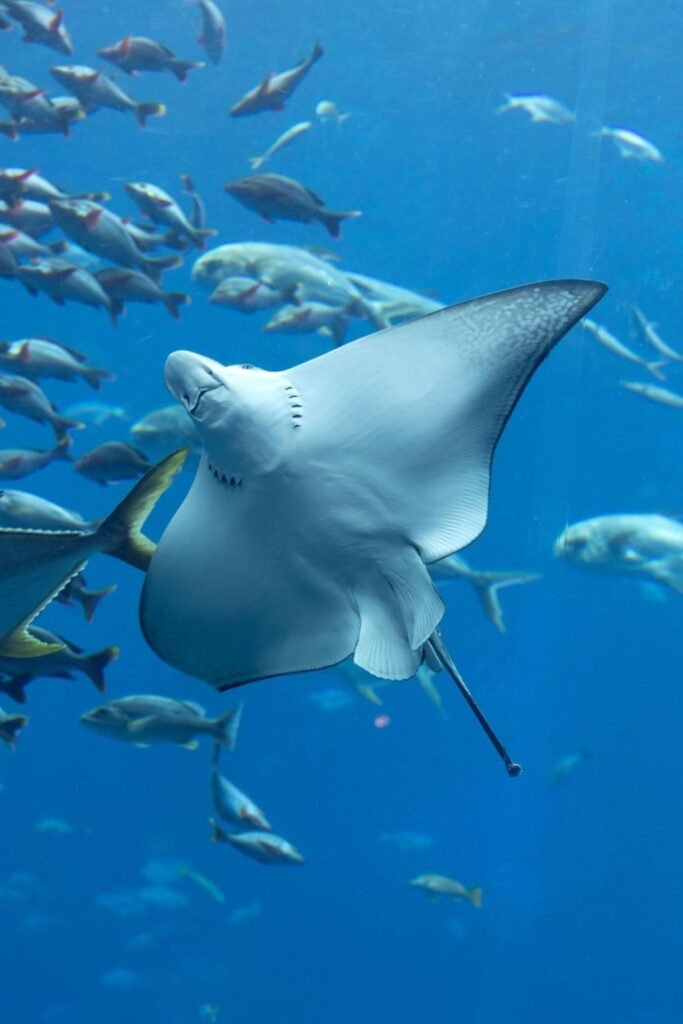
7. Their movement looks like flying
The way stingrays move through water is often compared to flying because of their broad wing-like fins.

7
8. Some species grow very large
Certain species, especially larger rays, can reach impressive sizes and wingspans.
9. They help maintain ecosystem balance
By feeding on crustaceans and small benthic organisms, stingrays help regulate marine food webs.
10. They are usually calm animals
Despite their dangerous reputation, stingrays are generally peaceful and only sting when accidentally disturbed.