Creating a consistent daily routine is one of the most powerful things you can do to improve your cat’s physical health, mental well-being, and overall happiness. Cats are creatures of habit who feel safest when they can predict what comes next in their day. A well-planned routine reduces stress, prevents unwanted behaviors such as excessive meowing, scratching furniture, or hiding, supports healthy digestion, maintains ideal weight, and strengthens the special bond between you and your feline companion. Whether you have a playful kitten, an independent adult, or a calm senior cat, a thoughtful daily schedule can dramatically improve quality of life. This complete 2026 guide walks you through every element of an ideal cat routine — from feeding and playtime to sleep, litter box habits, enrichment, and how to adapt the schedule to your lifestyle and your cat’s individual personality.
Why Routine Matters So Much for Cats
Unlike dogs, cats are not pack animals. They are solitary hunters by nature and thrive on predictability. Sudden changes in schedule (new work hours, moving house, or irregular feeding times) can trigger stress that shows up as litter box accidents, over-grooming, aggression, or appetite changes. A stable routine helps regulate their internal body clock, supports a healthy immune system, and gives them a sense of control in a human world. Studies in feline behavior show that cats with predictable daily schedules exhibit significantly lower levels of cortisol (the stress hormone) and live longer, healthier lives.
1. Feeding Schedule – The Foundation of the Day
Most adult cats do best with two to three small meals per day rather than free-feeding. Fixed meal times help prevent obesity, reduce begging, and support stable energy levels.
- Morning meal (within 30 minutes of you waking up)
- Afternoon or early evening meal (around 5–7 pm)
- Optional small third meal before bedtime for cats that get hungry at night
Use high-quality wet food, dry kibble, or a mix that matches your cat’s age, weight, and health needs. Measure portions carefully with a kitchen scale — guessing often leads to overfeeding. Always provide fresh water in multiple locations (cats prefer running water, so a pet fountain is ideal). For kittens under 6 months, feed 3–4 times daily. Senior cats may need smaller, more frequent meals and senior-specific formulas with joint support and easier-to-digest proteins.
2. Playtime and Exercise – Mental + Physical Stimulation
Cats need 15–30 minutes of active play every day, split into 2–3 short sessions. This is non-negotiable for indoor cats to prevent boredom and obesity.
- Morning play (10 minutes) – right after breakfast to burn energy
- Evening play (15–20 minutes) – the biggest session, using wand toys, laser pointers (with caution), or feather teasers
- Interactive toys that mimic hunting: balls that roll, mice that squeak, or puzzle feeders
Rotate toys weekly so they stay exciting. For high-energy breeds (Bengal, Siamese, Abyssinian) or young cats, add vertical space with cat trees, wall shelves, or window perches. Laser pointers should always end with a physical toy so the cat feels successful in “catching” something.
3. Litter Box Routine and Cleanliness
Cats are extremely clean animals. Scoop the litter box at least twice a day (morning and night) and do a full clean with mild soap once a week. Most cats prefer unscented, clumping litter in a large, open box placed in a quiet, private location. Keep one box per cat plus one extra. A predictable potty routine (after meals and play) helps prevent accidents.
4. Sleep and Rest Areas
Cats sleep 12–16 hours per day. Provide multiple comfortable sleeping spots in different rooms so they can choose based on temperature and mood. Orthopedic beds, cardboard boxes, and high perches are favorites. Create a calm bedtime routine: dim lights, offer a small snack or puzzle feeder, and avoid loud noises or rough play in the evening. Many cats enjoy a final gentle grooming or chin scratch before settling down for the night.
5. Enrichment and Mental Stimulation
Mental exercise is just as important as physical play. Incorporate these daily:
- Puzzle feeders or treat-dispensing toys
- Cardboard boxes and paper bags for exploration
- Window bird-watching stations
- Catnip or silver vine sessions 2–3 times per week
- Clicker training or simple tricks (sit, high-five, target) for food-motivated cats
Rotate enrichment items every few days to keep them interesting.
6. Grooming and Health Checks
Include 5–10 minutes of gentle brushing daily (especially for long-haired breeds) to reduce hairballs and strengthen your bond. Check ears, eyes, teeth, and paws during this time. This also becomes a wonderful way to notice early health changes.
Sample Daily Routine for an Adult Indoor Cat
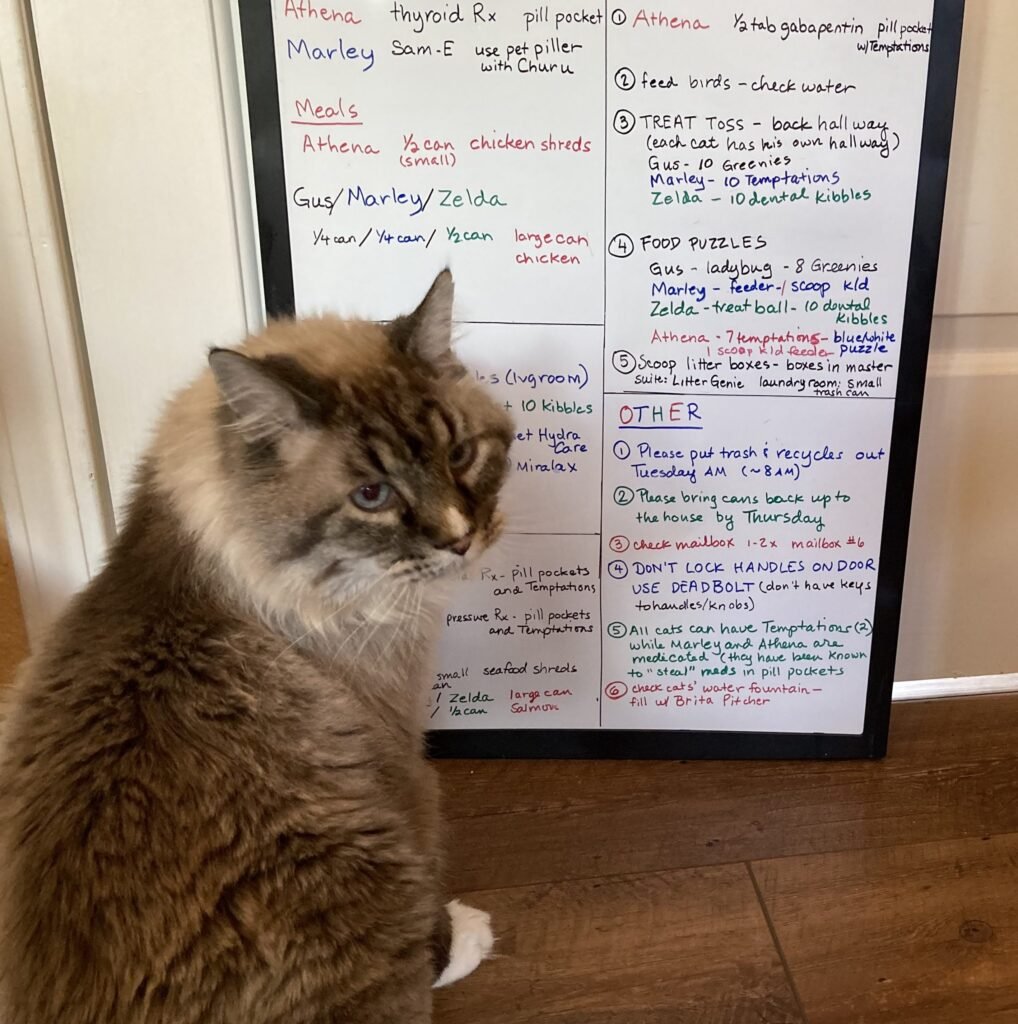
- 7:00 am – Wake up, fresh water, morning meal
- 7:15 am – 10-minute interactive play session
- 8:00 am – Litter box scoop
- 12:00 pm – Small snack or puzzle toy (if using 3 meals)
- 5:30 pm – Main evening meal
- 6:00 pm – 15–20 minute play session
- 8:00 pm – Litter box scoop + evening enrichment
- 10:30 pm – Final small treat or lick mat + calm wind-down
- 11:00 pm – Lights out, quiet time
Adapting the Routine to Your Lifestyle
If you work long hours, use automatic feeders and puzzle toys to break up the day. For cats that are alone 8+ hours, add a second litter box and more vertical space. When your schedule changes (new job, vacation, moving), introduce adjustments gradually over several days while offering extra play and affection.
Special Considerations by Age and Personality
- Kittens: More frequent meals and play (4–5 short sessions daily) plus heavy socialization.
- Senior cats: Shorter play sessions, softer beds, ramps, and more frequent smaller meals.
- Outdoor cats: Still benefit from a structured indoor routine plus safe outdoor time.
- Shy or anxious cats: Keep changes minimal and use pheromone diffusers (Feliway) to support calm.
Common Mistakes That Disrupt Routine
- Free-feeding dry food all day
- Inconsistent play or feeding times
- Cleaning the litter box only once a day
- Ignoring the need for vertical space and scratching posts
- Punishing normal cat behaviors instead of redirecting them
Tracking and Fine-Tuning
Keep a simple 7-day journal noting energy levels, appetite, litter box habits, and play response. Adjust the routine based on what your cat enjoys most. A good routine should feel natural for both of you.
In conclusion, building the perfect daily routine for your cat is one of the greatest gifts you can give them. It provides security, prevents behavior problems, supports lifelong health, and deepens the beautiful bond you share. Cats may seem independent, but they truly thrive when their world is predictable and enriched. Start today by choosing just two or three elements (consistent meal times and daily play are the easiest to begin with) and gradually build the full routine. With patience, observation, and love, you will soon notice your cat becoming calmer, more affectionate, playful, and content. A well-routined cat is not only healthier and happier — they become the relaxed, confident companion every cat owner dreams of. Your cat’s perfect day starts with you. Make it happen.