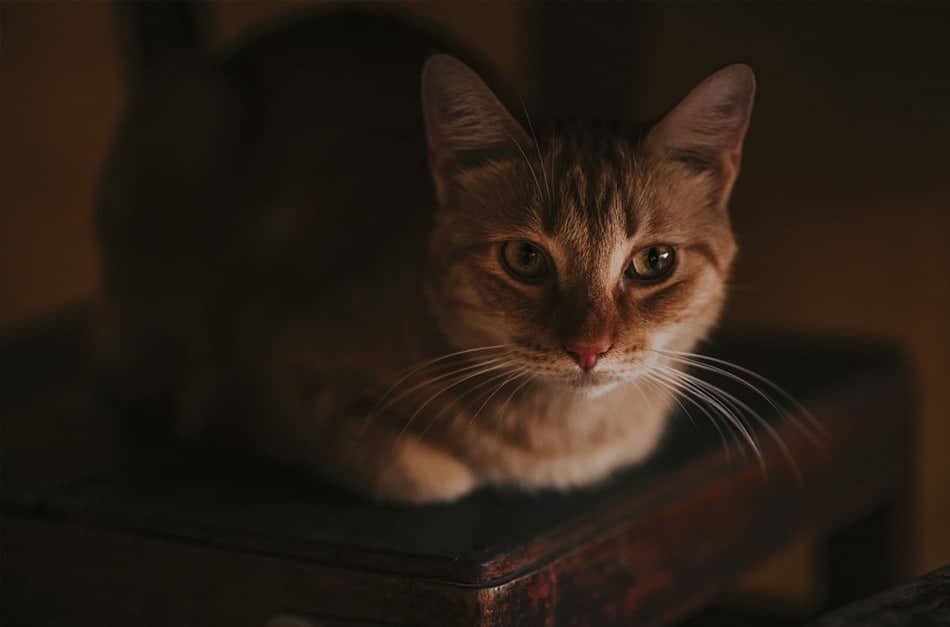
At first glance, one of the most common complaints among cat owners is exactly this: during the day the cat seems relatively calm, but once night arrives, the meowing becomes much more frequent. Sometimes it happens right after the lights go out, in other cases in the middle of the night, and very often always at the same time. For many people, this quickly becomes frustrating, especially when it interrupts sleep and seems to happen for no clear reason. The first reaction is usually to think that the cat simply wants attention, is being “needy,” or is doing it out of habit. The truth, however, is far more behavioral and much less random than it seems.
Cats have a biological rhythm that is different from ours. While humans reduce activity during the night, many cats are actually entering one of their most alert and energetic periods. This means that the exact moment when you are getting ready to sleep may be the moment when its body is most active. That alone already explains part of the increase in meowing, but the most important point usually lies in what happens immediately after it starts meowing.
In many homes, without realizing it, the owner ends up reinforcing this behavior. The mistake is usually not the meowing itself, but the human response that teaches the cat that meowing at night produces a result.
Nighttime Is Naturally a More Active Period for Cats
One of the most important things to understand is that many cats naturally tend to become more active during the night and early morning. This comes from the species’ biological rhythm and hunting instinct. In nature, these periods are usually associated with greater movement and a higher state of alertness.
Inside the house, this instinct does not disappear.
It simply adapts to the domestic environment.
That is exactly why many cats start walking around the house more, climbing furniture, exploring rooms, and vocalizing more during the night.
From the cat’s point of view, this may be a completely natural activity period.
Your Reaction May Be Teaching This Behavior
This is where one of the biggest mistakes happens without the owner realizing it. The cat starts meowing and, immediately, the person gets up, talks to it, gives it food, opens a door, pets it, or reacts in some way.
From the cat’s point of view, the logic becomes very clear.
I meow → something happens
That “something” may be food, attention, movement, or access to another area.
Over time, it learns that meowing at night works.
This is exactly what strengthens the behavior.
Very often, the problem is not that the cat meows.
It is that it learns the meowing produces results.
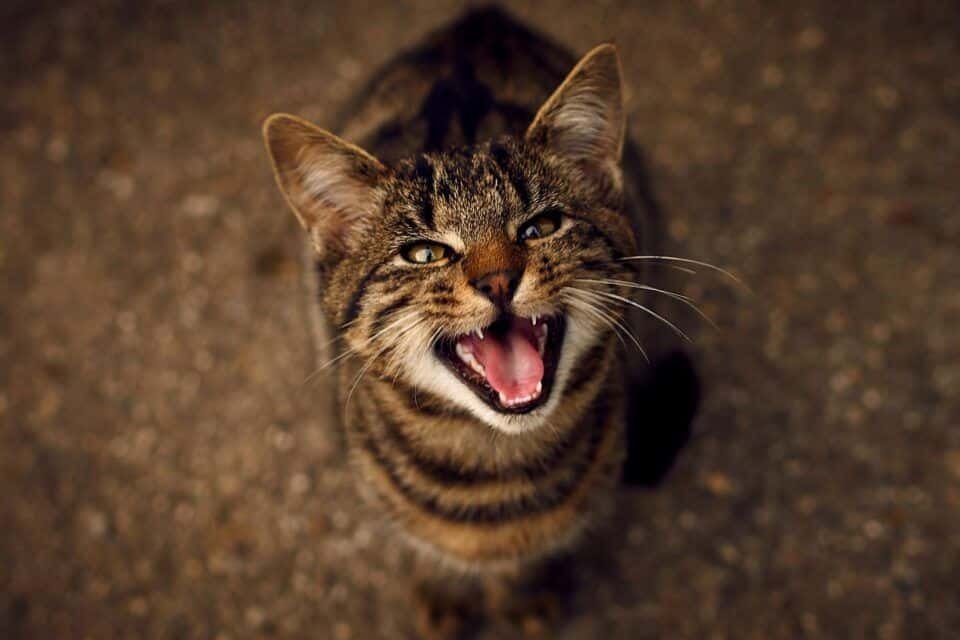
Built-Up Energy During the Day Also Plays a Role
Another very important factor is the amount of energy built up throughout the day. A cat that spends many hours sleeping, without environmental stimulation, playtime, or hunting-style activities, tends to release that energy at night.
Lack of play.
Little environmental enrichment.
No places to climb.
Few mental stimuli.
All of this can increase nighttime meowing.
Sometimes the meowing is not only communication.
It is stored energy looking for an outlet.
Conclusion
Your cat meowing more at night does not necessarily mean that there is a problem. In many cases, this is a combination of natural biological rhythm, accumulated energy, and behavioral learning.
Sometimes the behavior is not getting worse on its own.
Sometimes it is being quietly taught by the way the home responds to it.