The first six months of a kitten’s life are the most important time to build a healthy, happy, and confident cat. Everything you do in these early months — feeding, play, litter training, socialization, and daily routines — will shape how your kitten grows up. Good care now means fewer behavior problems, better health, and a stronger bond with you later. The best part? You don’t need expensive things or expert knowledge. Most of what a kitten needs can be done at home with simple habits, cheap supplies, and patience. This practical guide is made for regular cat owners who want easy, step-by-step ideas they can start using today in their own house.

The First 48 Hours – Bringing Your Kitten Home
The first two days are all about feeling safe.
- Set up a small “safe room” (a bathroom, laundry room, or corner of the living room closed with a baby gate). Put the litter box, food, water, a bed, and a few toys inside.
- Place an old T-shirt with your smell in the bed so the kitten feels comforted.
- Keep the room quiet and warm (around 24–26 °C).
- Let the kitten explore the room at their own speed. Sit on the floor and let them come to you.
- Feed them the same food the breeder or shelter was using for the first few days, then slowly mix in the new food.
This small safe space helps the kitten feel secure before they explore the whole house.
Feeding Your Kitten – Simple Schedule
Kittens grow very fast and need food often.
- From 8 weeks to 4 months: give 4 small meals a day.
- From 4 to 6 months: reduce to 3 meals a day.
- Use good-quality kitten food (wet is best because it has more water and is easier to eat).
- Measure the amount on the package and divide it into the daily meals.
- Always have fresh water in a shallow bowl or a pet fountain (kittens like moving water).
- Never give cow’s milk — it can cause diarrhea.
Keep mealtimes at the same hours every day so the kitten learns the routine quickly.
Litter Box Training – Easy and Fast
Most kittens learn the litter box in just a few days if you help them.
- Place a shallow, open litter box in the safe room.
- Use unscented clumping litter (about 5 cm deep).
- After every meal, nap, or play, gently place the kitten in the box and let them sniff.
- Praise with a calm voice and give a tiny treat when they use it.
- Scoop the box twice a day and do a full clean once a week.
- If they have an accident, clean the spot with enzymatic cleaner and put the kitten back in the box. Never punish them.
Keep the litter box clean and in the same place — kittens like consistency.
Playtime and Exercise – Daily Routine
Kittens have a lot of energy and need to play to grow strong and learn.
- Play 4–5 short sessions every day (5–10 minutes each).
- Use cheap wand toys, crumpled paper balls, or a sock with a little catnip.
- Let them chase, jump, and pounce — this is how they learn hunting skills.
- End each play session with a small treat so they feel successful.
- Provide a cat tree, cardboard boxes, or low shelves so they can climb and explore safely.
Play also helps them sleep better at night and prevents destructive behavior later.
Socialization – Helping Your Kitten Feel Confident
The first 16 weeks are the best time to introduce your kitten to new things in a positive way.
- Let different people (friends, children, visitors) pet and play with the kitten gently.
- Play soft sounds (vacuum, doorbell, car noises) at low volume while giving treats.
- Touch their paws, ears, mouth, and tail gently every day so they get used to handling.
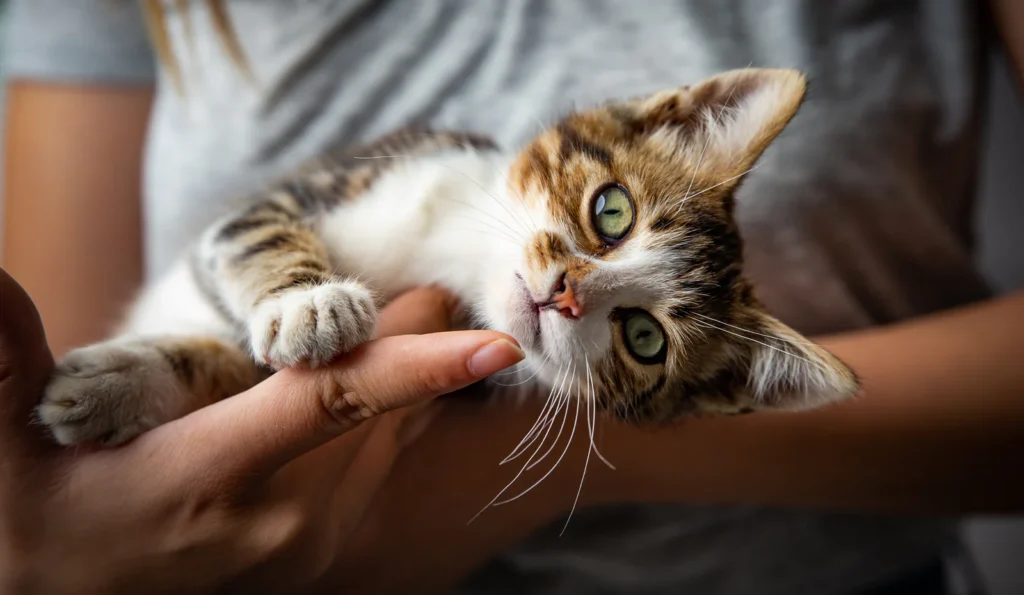
- Carry the kitten around the house in your arms so they see new rooms safely.
- Introduce them slowly to other pets — never force meetings.
A well-socialized kitten grows into a calm, friendly adult cat that is not afraid of new situations.
Grooming and Health Checks at Home
Get your kitten used to being touched early:
- Brush them gently for 2–3 minutes a few times a week (use a soft brush).
- Look inside their ears and wipe with a damp cotton ball if needed.
- Check their paws and trim the very tip of the nails every 2 weeks (only the white part).
- Wipe their eyes with a soft damp cloth if there is any crust.
These short moments help your kitten stay calm at the vet later.
Sleep and Rest Routine
Kittens sleep 16–20 hours a day.
- Create several cozy sleeping spots in the safe room and around the house.
- Keep a calm bedtime routine: play, then a small meal, then quiet time.
- Place the bed near (but not on) your bed at night so they feel close to you.
- If they wake up crying at night, a ticking clock or a warm water bottle wrapped in a towel can help them feel comforted.
Simple Weekly Checklist for the First Six Months
- Monday: Play session + litter box full clean
- Wednesday: Gentle grooming and nail check
- Friday: New toy or box for enrichment
- Sunday: Health check (weight, eyes, ears, paws) + update your notes
This checklist takes only a few minutes but keeps everything on track.
Common Problems in the First Six Months and Easy Fixes
- Biting and scratching: Say “ouch” in a high voice and walk away for 10 seconds. Offer a toy instead.
- Nighttime zoomies: Give a big play session before bed and a small meal.
- Not using the litter box: Make sure the box is clean, big enough, and in a quiet spot.
- Not eating: Warm the food slightly or add a little tuna water.
- Fear of new things: Go very slowly and use treats to create positive associations.
Special Tips for Different Situations
- Single kitten: Spend extra play time so they don’t feel lonely.
- Multi-cat home: Introduce the new kitten slowly in separate rooms first.
- Apartment living: Use vertical space (shelves, cat trees) to give them more room to explore.
In conclusion, caring for a kitten in the first six months is all about simple daily routines you can do at home: regular meals, short play sessions, a clean litter box, gentle handling, and lots of positive experiences. These easy habits help your kitten grow into a calm, healthy, and confident adult cat. You don’t need fancy things — just consistency, patience, and love. Start today with one small thing (maybe a 5-minute play session or showing the litter box). Within a few weeks you will see your kitten becoming more playful, more affectionate, and more comfortable in their new home. The time you invest now is the foundation for many happy years together. Your kitten is learning from you every single day. With the practical tips in this guide, you can give them the best possible start in life — right from your own home. Enjoy every moment of these first six months. They grow up fast, but the bond you build now will last a lifetime.