
The capybara is one of the most fascinating and recognizable animals in South American wildlife. Scientifically known as Hydrochoerus hydrochaeris, the capybara is famous for being the largest rodent in the world. Because of its size, peaceful appearance, and strong connection with aquatic environments, it has become one of the most admired mammals in countries such as Brazil, Argentina, Paraguay, and Venezuela. In recent years, the capybara has also become very popular on social media and in educational projects because of its calm behavior and interesting biology.



8
The capybara belongs to the family Caviidae, the same family as guinea pigs and other rodents, but it is much larger than its relatives. Adult capybaras generally measure between 1 and 1.3 meters in length and can weigh from 35 to 70 kilograms, although some individuals may become even heavier depending on habitat and food availability.
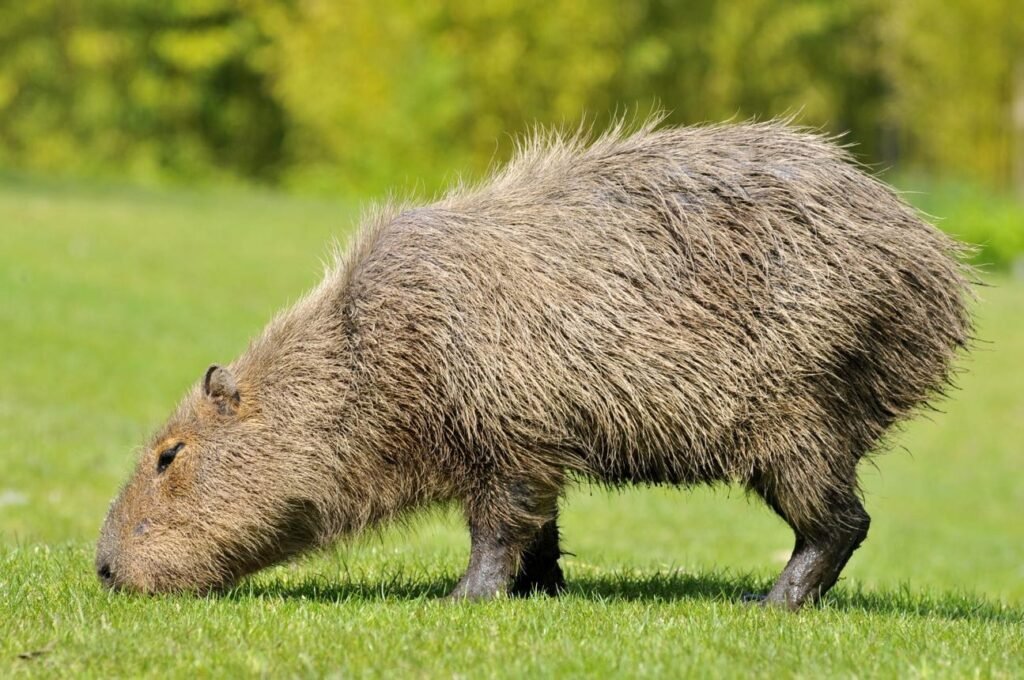
Its body is large, rounded, and muscular, with short but strong legs that support its weight. The fur is usually brown, reddish-brown, or grayish, which helps it blend into grassy and muddy environments.
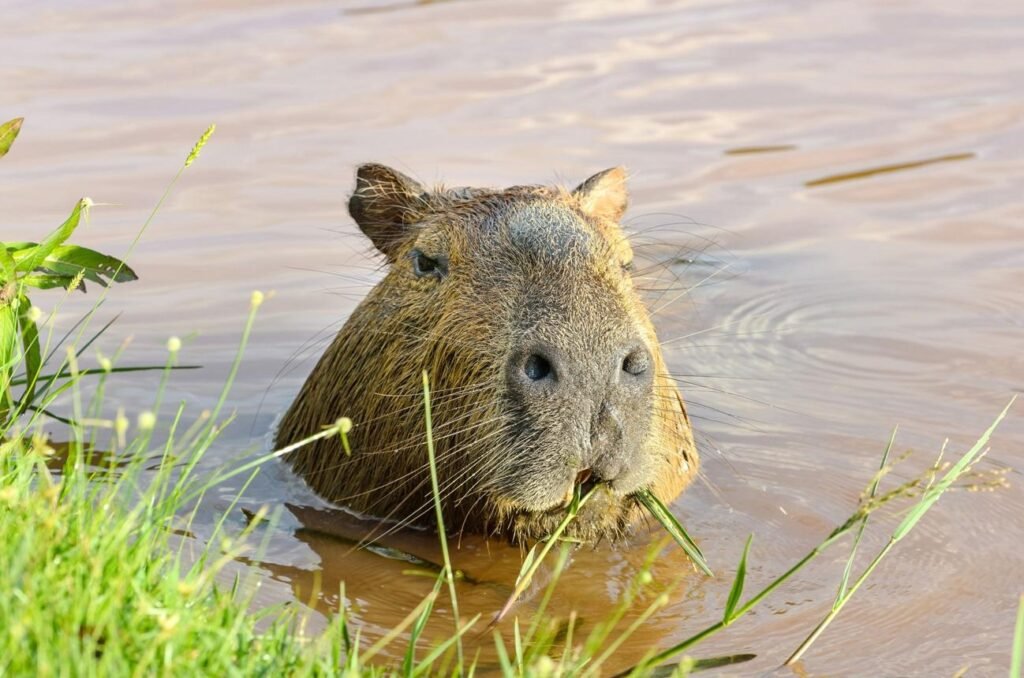
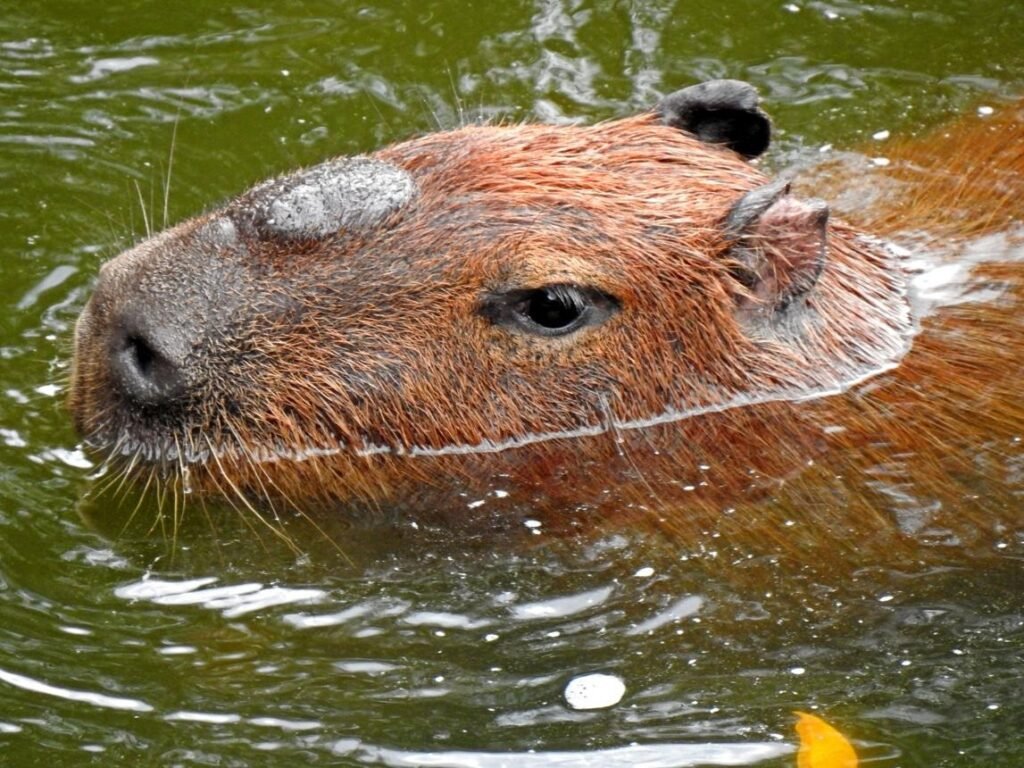
One of the most remarkable physical adaptations of the capybara is the placement of its eyes, ears, and nostrils on the upper part of the head.
This feature is extremely important because it allows the animal to stay mostly underwater while still being able to breathe, hear sounds, and observe predators.



7
This is one of the main reasons capybaras are classified as semi-aquatic mammals.
They are strongly associated with freshwater environments such as:
- rivers
- lakes
- ponds
- marshes
- wetlands
- flooded fields
Water is essential to the life of the capybara.
It is used for:
- cooling the body
- escaping predators
- resting during hot weather
- protecting young
- social interaction
Capybaras are excellent swimmers and can remain underwater for several minutes when necessary.
Their feet are slightly webbed, which helps them move efficiently in water.
From a behavioral perspective, capybaras are highly social animals.
They rarely live alone.
Instead, they form groups that can range from 5 to more than 20 individuals, depending on habitat conditions.
These groups are generally composed of:
- one dominant male
- several females
- young individuals
- babies
Group living is extremely important for survival.
Living together helps protect them from predators such as Jaguar, caimans, anacondas, and large birds of prey.
If danger is detected, capybaras quickly run toward the water.
Their social structure also includes communication through sounds, body posture, and scent marking.
They can produce whistles, barks, clicks, and purring sounds.
These sounds are often used to communicate alarm, locate group members, or maintain social bonds.
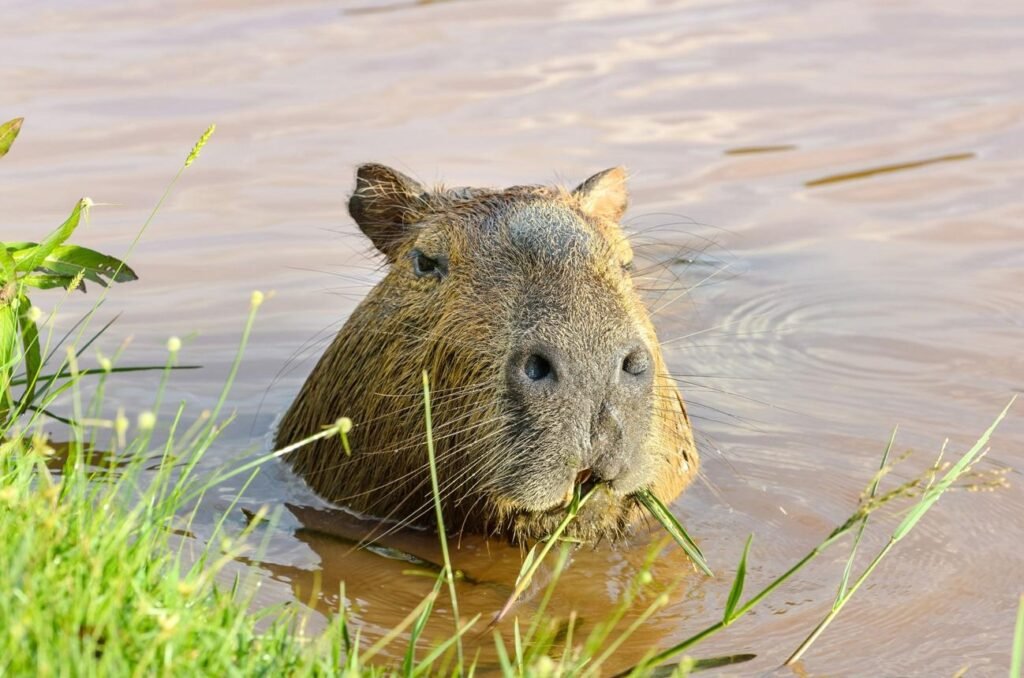
The capybara is a herbivore, meaning it feeds only on plant material.
Its diet mainly includes:
- grass
- aquatic plants
- leaves
- bark
- fruits
- reeds

6
Because its diet contains a large amount of fiber, its digestive system is highly specialized.
Like other rodents, capybaras possess large incisors that continuously grow throughout life.
These teeth are essential for cutting grass and chewing tough vegetation.
Another interesting biological characteristic is that capybaras sometimes practice coprophagy, which means they may re-ingest certain fecal matter to extract additional nutrients.
This process helps improve digestion efficiency.
From a reproductive point of view, capybaras have a gestation period of about five months.
The female usually gives birth to 2 to 8 babies.
The young are born already covered in fur and are able to walk very shortly after birth.


6
This early mobility is extremely important for protection against predators.
Ecologically, capybaras play a very important role.
As herbivores, they help control vegetation growth in wetlands and grasslands.
At the same time, they are an important food source for predators.
This makes them a key part of the food chain.
In urban environments, especially in Brazil, capybaras are increasingly seen in parks, lakes, and green spaces.
Many people consider them symbols of Brazilian wildlife because of their calm and friendly appearance.
In conclusion, the capybara is an extraordinary mammal that combines large size, social behavior, aquatic adaptation, and ecological importance.
Its peaceful nature and fascinating biology make it an excellent subject for school research and wildlife studies.
1. Capybaras are the largest rodents in the world
One of the most impressive facts about capybaras is their size. They are officially recognized as the largest rodents on Earth. While most people are familiar with small rodents such as mice, rats, hamsters, and guinea pigs, capybaras are much larger than all of them. An adult can measure over 1 meter in length and may weigh between 35 and 70 kilograms, with some individuals becoming even heavier. Their large size gives them a very unique appearance among rodents and makes them one of the most recognizable mammals in South America.



6
2. They are amazing swimmers
Capybaras are semi-aquatic mammals and are incredibly comfortable in water. In fact, water is one of the most important parts of their daily life. They use rivers, lakes, marshes, and ponds for swimming, cooling down, resting, and escaping danger. Their slightly webbed feet make swimming much easier and more efficient. They can move smoothly through water and often spend long periods partially submerged.


7
3. Their eyes, ears, and nose are perfectly adapted
A fascinating adaptation of the capybara is the placement of its eyes, ears, and nostrils on the top part of the head. This allows the animal to stay mostly underwater while still being able to breathe and observe its surroundings. This feature is very useful for detecting predators and staying safe.
4. They are extremely social animals
Capybaras rarely live alone. They are highly social and usually form groups that can range from a few individuals to large families. Living in groups helps them stay protected from predators such as Jaguar and caimans. Group members often rest, eat, and swim together.

7
5. They communicate with many sounds
Capybaras communicate through a surprising variety of sounds. They can whistle, bark, purr, click, and make alarm noises. These sounds help them warn the group about danger and keep contact with family members.
6. They only eat plants
Capybaras are strict herbivores. Their diet includes grass, leaves, aquatic plants, and fruits. Because they eat a large amount of fiber, their digestive system is highly specialized.

6
7. Their teeth grow all the time
Like all rodents, capybaras have incisors that never stop growing. This means they need to keep chewing plants and grasses constantly to wear their teeth down.
8. They are known for being calm
One reason capybaras became so popular is their calm and peaceful appearance. They are often seen resting quietly near water or in groups.
9. They live in many South American countries
Capybaras are found in countries such as Brazil, Argentina, Paraguay, and Venezuela.



7
10. Babies are born ready to move
Baby capybaras are born with fur and can walk very soon after birth. This helps them quickly follow the group and stay protected.
11. Water is their main protection
When threatened, capybaras often run directly into water. This helps them escape predators and hide more effectively.
12. They help control plant growth
Because they eat large amounts of grass and plants, capybaras help maintain balance in wetland ecosystems.
13. They are common in city parks
In many places in Brazil, capybaras are now frequently seen in urban parks and lakes.


6
14. They can stay underwater for several minutes
Capybaras are capable of remaining underwater for several minutes, which helps them hide from danger.
15. They became wildlife icons
Today, capybaras are often considered one of the most beloved symbols of South American wildlife, especially in Brazil.